
Whitepaper: Added value of integrated energy solutions
Neighborhoods and complexes are more than the sum of their buildings. If their energy supply is planned as an integrated concept, this is more advantageous in terms of energy efficiency and costs than individual solutions.


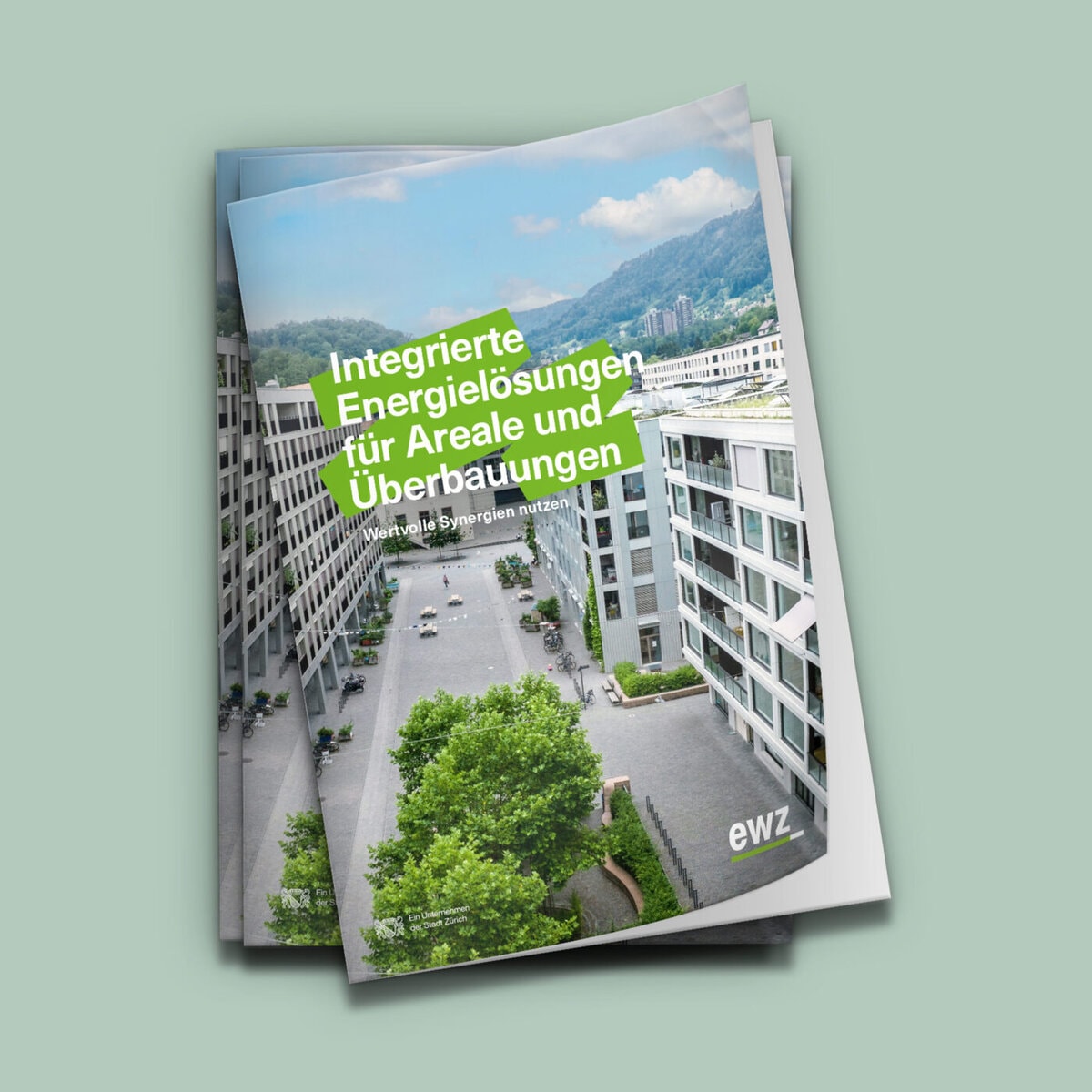 Integrated energy solutions for sites and complexes intelligently network all energy supply components with each other, allowing production, consumption and storage to interact optimally as an overall system. In this way, efficiency potential can be exploited, the degree of self-sufficiency increased and the secure supply of new and existing properties guaranteed in the long term. At the same time, integrated energy solutions result in economic benefits, as operating costs are usually lower, but also because sustainability aspects are becoming increasingly important in the valuation of properties. The New white paper "Integrated energy solutions for sites and developments" of ewz and Faktor serves property owners as a knowledge base for planning.
Components of integrated energy solutions
In order to take advantage of synergies, the energy solution should be planned as a networked system at an early stage.
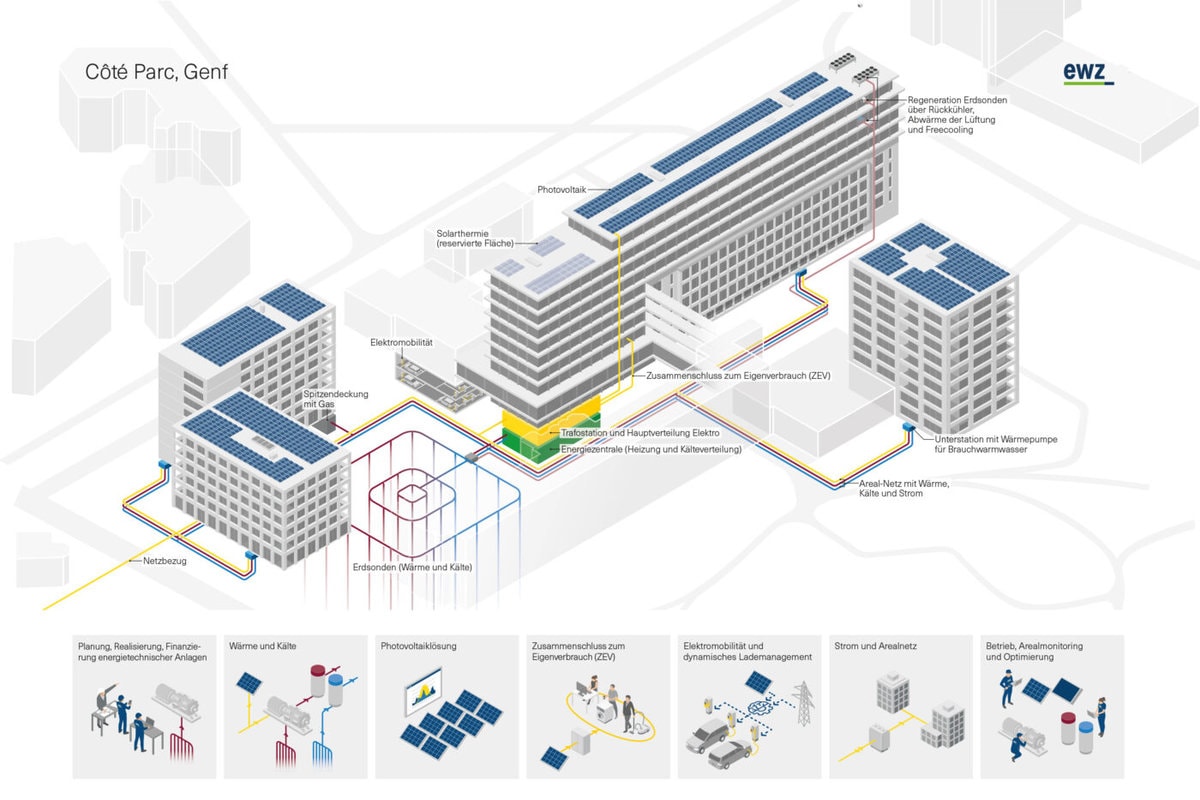
An energy management system coordinates the energy flows of all consumers and producers. This increases the energy efficiency of the system while reducing costs. Another important aspect is sector coupling. The aim is to make better use of renewable energies and to supply as little energy as possible from outside. Thermal networks supply areas or complexes with climate-friendly heating and cooling. They can be operated at high, medium or low temperature levels. The lowest operating temperatures are achieved by anergy grids, which can also cool buildings via freecooling. To support the switch to electric vehicles, the construction of charging infrastructure should be incorporated into building planning at an early stage. A load management system coordinates the electricity demand of the charging stations with that of other consumers in the building and regulates charging. Batteries from electric cars that are suitable for bidirectional charging, as well as stationary or thermal storage units, are possible energy storage options.
Energy-as-a-Service
Use instead of own - this principle is ideal for integrated energy solutions for entire buildings or areas. For customers, it not only reduces the time required, but also the financial risk with significantly greater security of supply. If a building owner decides in favor of a Energy-as-a-Service modeloutsources the planning, construction, operation and/or financing of the entire energy infrastructure. This is also associated with the certainty that the systems will be operated reliably and efficiently.
Find out more in our new whitepaper "Integrated energy solutions for sites and developments".